If you’ve ever stood next to a Vertical CNC Lathe running a tough batch of parts, you know how fast tool wear can sneak up on you. One minute your insert is cutting clean, the next it’s chipping, wearing thin, and you’re pulling the machine out of cycle to swap a tool—costing you time, money, and a ton of wasted material. As someone who sells these vertical lathes day in and day out, I can’t tell you how many customers call me frustrated because their tooling is wearing out way faster than it should. Most of the time, the culprit isn’t a bad insert or a wrong speed setting—it’s the coolant they’re (or more often, aren’t) using. Let’s break down exactly what coolant does on a vertical CNC lathe, how it cuts tool wear, and why it’s non-negotiable if you want to keep your machine running at peak performance. Vertical CNC Lathe
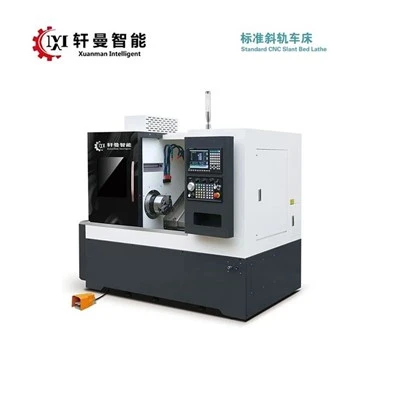
First, let’s get one thing straight: vertical CNC lathes work way differently than horizontal ones, and that changes how coolant does its job. On a vertical lathe, the workpiece spins vertically, so the chips and coolant don’t naturally drain down and away from the cutting zone like they do on a horizontal machine. If your setup is off, chips can get trapped between the tool and the workpiece, and heat can build up so fast it warps the insert, the part, or even the machine’s spindle before you notice. Coolant fixes that in three core ways, and each one directly impacts how long your tools last.
The first big one is heat management. When a tool cuts metal, like stainless steel, Inconel, or even hardened steel, 70-80% of the heat generated from friction goes straight into the cutting tool. The rest goes into the workpiece and the chips. If that heat isn’t pulled away fast, the tool’s material—whether it’s carbide, cermet, or high-speed steel—loses its hardness. Carbide inserts can handle high temps, but push them over 1,000 degrees Celsius, and their edge starts to soften. Once the edge softens, you get crater wear, where material builds up on the tool’s rake face, or flank wear, where the side of the insert rubs against the workpiece until it’s gone. Coolant works by absorbing that heat right at the cutting zone. But it’s not just pouring any liquid on it—modern CNC coolants are formulated specifically for this. They have high thermal conductivity, so they don’t just sit on top of the chips; they penetrate the tiny gaps between the tool, the chip, and the workpiece to pull heat away before it can damage the tool. I’ve seen customers skip using proper coolant because they think “water works” or just use tap water, and within a week their tools are wearing out 2x faster than they should. Tap water doesn’t have the thermal properties to handle that kind of heat, and it even causes corrosion in the machine’s lines over time.
Second, coolant flushes away chips. This is where vertical lathes have a unique pain point. Because the workpiece is spinning vertically, chips from the cut can fall straight down, but if the machine’s guard is closed (which it should be for safety), those chips get trapped in the cutting zone. If they’re not moved out fast, they act like tiny grinding stones between the tool and the workpiece, causing abrasive wear on the insert edge. That’s a huge one I see overlooked all the time. On a horizontal lathe, chips get pushed out by the tool’s path, but on vertical, if coolant isn’t flowing with enough pressure and volume, chips get stuck. A good CNC coolant system is set up with high-pressure nozzles that aim right at the cutting edge, and the flow carries those chips away before they can scratch the tool. Even better, some coolants have lubricating additives that make chips smaller and easier to move, so they don’t clump up into big chunks that get wedged between the tool and part. Last month, a customer reached out saying their carbide turning inserts were only lasting 20 parts apiece, even though they were running the exact same parameters I recommended for their vertical lathe. Turned out their coolant nozzle was clogged, so barely any flow was reaching the cut. Once we cleared it and adjusted the flow pressure, their inserts were lasting 100+ parts—same tool, same speed, just better chip flushing.
Third, coolant acts as a lubricant, reducing friction between the tool and the workpiece, and the tool and the chip. Wait, I know what you’re thinking—you need heat, but lubrication cuts down on friction. Friction generates just as much heat as cutting action itself, especially when working with sticky metals like aluminum or titanium, which tend to weld to the tool edge. That’s called built-up edge (BUE), and it’s a nightmare. When aluminum welds to the insert, it changes the tool’s cutting geometry, leading to rough parts and excessive wear. Coolants with extreme pressure (EP) additives prevent that. The EP chemicals form a protective layer on the tool’s edge that keeps metal from welding to it, and also reduces the friction between the tool and the chip as it curls away from the cut. Less friction = less heat = less wear. For vertical lathes, where the cut zone is often hidden inside the spindle’s work envelope, that lubrication is even more important because there’s less air circulation to cool things down, and chips can’t just escape on their own without flow to push them. I always tell customers running vertical lathes for heavy turning or boring to use a semi-synthetic coolant with EP additives, not a straight synthetic or a straight oil. Straight oils can get too thick and leave residue on the machine over time, while synthetics don’t have enough lubricity for heavy cuts. Semi-synthetics hit that sweet spot: good cooling, good lubrication, less mess, and they’re easy to maintain.
Now, it’s not just the coolant itself that matters—how you use it on a vertical CNC lathe makes all the difference. I’ve seen guys set up their coolant to trickle out of one tiny nozzle, and wonder why their tool wear is out of control. For vertical lathes, you need at least two nozzles per cut: one aimed at the rake face (where the chip slides over) and one at the flank face (where the tool rubs against the workpiece). The flow pressure should be between 100 and 150 psi for most turning operations, higher for boring or grooving where the cut zone is smaller. Volume matters too—aim for at least 10 liters per minute per nozzle. That might sound like a lot, but on a vertical lathe, you need that kind of flow to push chips out of the enclosed work area. Also, maintaining your coolant is non-negotiable. A lot of shops let coolant sit in the sump for months, not testing its concentration or changing it. Over time, coolant breaks down, bacteria grows, and its thermal and lubricating properties go out the window. Bacteria can even break down the EP additives, so you lose that protection against built-up edge. I recommend testing your coolant every two weeks, maintaining a concentration of 5-8% for semi-synthetics, and changing the sump entirely every 6 months to a year, depending on how hard you run the machine. A clean sump means a clean coolant line, which means no clogged nozzles, which means your coolant is actually doing its job.
Wait, let’s address a common myth I hear all the time: “I use dry cutting to get better surface finish and longer tool life.” Yeah, sure—if you’re cutting super soft aluminum with a diamond tool, maybe. But for most jobs on a vertical CNC lathe, dry cutting is a recipe for dead tooling and scrap parts. I’ve had customers try dry cutting to skip coolant costs, and within a month they were spending more on inserts than they would have on coolant for a year. Dry cutting generates way too much heat, and without flushing, chips get trapped and cause abrasive wear. The only time I ever recommend dry cutting is for extremely light, high-speed finishing passes on very soft materials, and even then, a mist of synthetic coolant works better. For anything else, coolant isn’t a “nice to have”—it’s part of the tooling system on your vertical lathe.
Another thing to consider: vertical CNC lathes are often used for large parts, right? Like heavy industrial parts for aerospace, energy, or construction. Those parts are way bigger, and they require deeper, heavier cuts than smaller parts on a horizontal lathe. The heat and chip load from those heavy cuts is way higher, so coolant becomes even more critical. If you’re turning a 1-ton steel part on a vertical lathe, and your coolant isn’t doing its job, that insert will wear out after a few cuts, and you’ll have to rework the entire part, which costs way more than any coolant you’d buy. I had a client in the energy sector last year who was running 4140 steel parts for gearboxes, and they were going through $5,000 worth of inserts a month. We adjusted their coolant setup: added a second nozzle, increased flow pressure, switched to a semi-synthetic EP coolant, and started a monthly coolant maintenance schedule. Their insert costs dropped to $1,200 a month. That’s a huge savings, all because of a better coolant strategy.
Now, let’s talk about what happens when coolant isn’t doing its job, just to drive the point home. The three main types of tool wear you’ll see from bad coolant are: crater wear, flank wear, and built-up edge. Crater wear happens when heat softens the tool’s rake face, and the chip rubs against it, wearing a crater. Flank wear is when the side of the insert rubs against the workpiece, because there’s no lubrication and heat makes the tool expand unevenly. Built-up edge is when material welds to the tool edge, and every time you rotate the workpiece, that BUE falls off and scratches the part surface, leading to scrap. All of these add up to shorter tool life, more tool changes, more downtime, and higher costs. Coolant eliminates or reduces all three.
So, what should you actually do if you want to reduce tool wear on your vertical CNC lathe with coolant? First, pick the right coolant for your application. For heavy turning or boring of steel, go with a semi-synthetic coolant with EP additives. For aluminum, go with a coolant that’s formulated to prevent aluminum buildup (avoid coolants with sulfur, which can react with aluminum). For titanium, use a synthetic coolant with extreme pressure additives that can handle high temps. Second, set up your nozzles correctly: two nozzles per cut, aimed at rake and flank faces, pressure 100-150 psi, volume at least 10 LPM per nozzle. Third, maintain your coolant: test concentration every two weeks, top off with concentrate as needed, change the sump every 6-12 months, and clean the sump regularly to avoid debris. Fourth, don’t skip coolant for dry cutting unless it’s a very specific, light finishing pass.

At the end of the day, the role of coolant isn’t just to keep the machine clean or the parts wet—it’s a core component of tool performance. It’s how you keep heat away from your insert, flush away chips that scratch tools, and reduce friction that causes wear. As a vertical CNC lathe supplier, I tell every customer that investing in a good coolant system and maintenance plan is just as important as buying the machine itself. Skipping it might save you a few bucks upfront, but it’ll cost you way more in the long run from tool changes, downtime, and scrap parts. If you’re having trouble with tool wear on your vertical lathe, or you want to optimize your coolant setup to save money, reach out to talk through what works best for your operations. We work with all kinds of shops, from small job shops to big industrial facilities, and we can help you get your coolant strategy right so your tools last longer, your parts are better, and your machine runs smoother.
CNC Turning Machine References
- Shaw, M.C. Metal Cutting Principles. Oxford University Press, 2005.
- Astakhov, V.P. Metal Cutting Theory and Practice. CRC Press, 2006.
- Brown, J. “Coolant Effects on Tool Life in Vertical Turning Operations.” Journal of Manufacturing Processes, vol. 18, no. 2, 2015, pp. 112-119.
- DeGarmo, E.P., et al. Materials and Processes in Manufacturing. Pearson, 2020.
Jiangsu Xuanman Intelligent Equipment Co., Ltd.
As one of the most professional vertical CNC lathe manufacturers in China, we’re featured by quality products and low price. Please rest assured to buy discount vertical CNC lathe made in China here from our factory. Customized orders are welcome.
Address: No.1-1, Weier Road, Jieji Equipment Manufacturing Industrial Park, Sihong County, Suqian City, Jiangsu Province, China
E-mail: jsxmzn@163.com
WebSite: https://www.xm-machs.com/
