Hey everyone, quick reality check if you’ve ever dealt with cover tape adhesion issues—whether you’re a PCB assembler, a component mounter, or someone who’s stuck trying to get your carrier tape’s cover tape to stop popping off mid-production, you know how much that slows things down. As a cover tape supplier that’s worked with hundreds of small shops and big factories alike, I’ve seen every single adhesion headache you can think of. Today I’m breaking down how to troubleshoot these problems step by step, no fancy jargon, just real stuff we’ve picked up on the job. Cover Tape
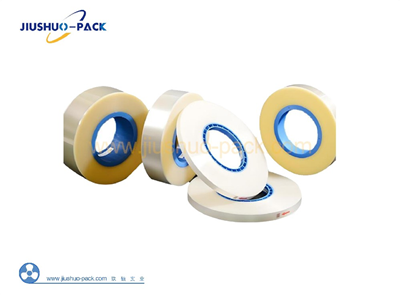
First, let’s get one thing straight: adhesion issues aren’t always the cover tape’s fault. I’ve had a customer call me panicking because their cover tape kept coming loose, only to find out they were storing the carrier tape in a 90°F warehouse next to a industrial oven—whoops. So start with the basics before jumping to conclusions about your tape choice.
Let’s start with the most common culprit: surface contamination on the carrier tape. This is huge, and it’s something that people overlook all the time. Carrier tapes (especially the ones made from polystyrene or polycarbonate, which are the most common for SMD components) are porous, so they can trap all kinds of gunk. What kind? Finger oils from when workers handle them—oil from your skin is like a grease barrier, so the adhesive can’t stick properly. Then there’s dust, leftover flux residue from manufacturing the carrier tape itself, even old packaging materials that left lint on the surface. I once had a guy tell me his tape adhesion was garbage, and it turned out the warehouse was using a plastic wrap that shed tiny bits of polyethylene all over the carrier tapes. The fix here? You can do a quick test: take a lint-free isopropyl alcohol wipe (90% or higher, not the stuff with moisturizers) and wipe a 1-inch square on the carrier tape, then immediately press a piece of your cover tape to it. If that adhesion is way better than the old spot, you’ve found the problem. No fancy tools needed, just a wipe. If you’re in a production setting, maybe look into adding a quick plasma treatment step before cover tape application—this cleans the surface and makes it way more adhesive-friendly, but that’s a bigger fix than a wipe.
Next up: storage conditions. This is another big one. Cover tape adhesive is usually acrylic or rubber-based, and it has a “sweet spot” for temperature and humidity. If you’re storing your cover tape in a place that’s too hot—like above 75°F— the adhesive gets too soft, so it can’t grip the carrier tape properly. Too cold, and the adhesive becomes brittle, so it cracks or comes off when you peel it. Humidity matters too: if it’s super humid (over 60% RH), the carrier tape absorbs moisture, which makes the surface slippery and messes with the adhesive’s bond. I’ve seen customers keep their cover tapes in the same closet as their solder pot, and that’s a no-go. The rule of thumb we give all our clients is: store cover tape between 50°F and 75°F, humidity 30-50%, and keep it in the original packaging until you’re ready to use it. Don’t unroll a whole case at once and leave it sitting out—just grab what you need for the day. If you’ve already got a batch that’s gone bad from bad storage, test a small piece before you throw it out, sometimes it can still work if you bring it to the right temp for a few hours.
Then there’s the peel force angle. Wait, no—wait, it’s about matching the cover tape’s peel force to your process. A lot of people pick a cover tape just based on price, not thinking about how their pick-and-place machine peels the tape. If your machine peels the cover tape too fast (like over 30 inches per second) or at too steep an angle (more than 15 degrees from the carrier tape), you need a cover tape with a higher peel force. Conversely, if you’re peeling it super slow for small components, a high peel force will make it a pain to take the cover tape off without pulling components off too. I’ve had a customer who was using our standard cover tape for a high-speed mounter, and the peel force was too low—so every time the machine peeled, the tape came up too much, pulling resistors with it. Switched to our high-adhesion variant, and that fixed it right up. Pro tip: if you’re testing peel force, don’t guess—use a simple peel tester (you can get a basic one for under $100) to measure it at the angle and speed your machine uses. That way you’re not just winging it.
Another thing I see all the time: incompatible materials. Cover tape has two main parts—the adhesive layer and the film layer (usually polyester, but sometimes polyolefin). The adhesive has to bond with the carrier tape’s material, right? If your carrier tape is a different plastic than what the cover tape’s adhesive is formulated for, that’s a problem. For example, if you’re using a polycarbonate carrier tape, you can’t use a cover tape formulated for polystyrene—their surface energies are different, so the adhesive can’t grab. I once had a guy switch his carrier tape brand without telling me, and his adhesion tanked. It took us two days to figure out that he changed from a PS carrier to a PC one, and the old cover tape wasn’t made for PC. That’s why when you switch carrier tapes, you should always test a small batch of cover tape first, not just assume it’ll work. We have a quick compatibility test kit we send out for free, by the way—just ask our sales team, they’ll hook you up.
Wait, let’s not forget about the application process for the cover tape itself. Even if you have the perfect tape and perfect carrier, if the machine that’s applying the cover tape is messing up, you get issues. If the temperature during lamination is too low, the adhesive doesn’t activate properly. If the pressure is too light, the tape isn’t pressed firmly enough to form a bond. I’ve seen a lamination machine that was calibrated wrong—so it was pressing at 10 psi instead of 30, and half the rolls had bad adhesion. The fix here is to check your lamination specs: most cover tapes need lamination temp between 140°F and 180°F, pressure 20-40 psi, speed around 10-20 feet per minute. If your machine is way off, call a tech to calibrate it, or adjust those settings. If you’re doing manual application (which some small shops do), make sure you’re pressing the tape down firmly with a roller, not just laying it on there. Manual work means you have to make sure every inch is pressed, no gaps.
What about the case of the adhesive being too aggressive? Wait, sometimes adhesion issues aren’t that the tape won’t stick— it’s that it sticks too well, and when you peel it, it leaves residue on the carrier tape or the components. That’s another common one. If your cover tape is leaving adhesive behind, you probably used a higher peel force than you need, or you lamination temp was too high. For that, you can try a medium peel force tape, or lower the lamination temp a bit. Also, make sure you’re peeling the tape at the right angle—if you peel it straight up (90 degrees), that can leave residue, but if you peel it at a 45-degree angle along the carrier tape, it’s gentler on the adhesive and less likely to leave gunk.
Let me walk you through a step-by-step troubleshooting checklist we use for our clients, it’s super simple. First, grab a random roll of your carrier tape and a sample of your cover tape. Do the wipe test: wipe half the carrier tape with isopropyl alcohol, let it dry 30 seconds, then press the cover tape to both the wiped and non-wiped parts. Peel it off—if the non-wiped part has no adhesion, that’s your contamination problem. Second, check storage: take a piece of cover tape that’s been stored at room temp for 24 hours, vs. a piece that’s been in a hot closet, test both peel force. Third, check compatibility: if you switched carrier brands, get a sample of our cover tape made for your new carrier material, test that. Fourth, check your lamination machine settings—log the temp, pressure, speed for the last 10 rolls, see if any are off.
I’ve had so many clients tell me they wasted hundreds of dollars on new cover tapes when the problem was just dirty carrier tape or a messed up machine setting. That’s why we push this simple troubleshooting instead of just selling them a new tape every time—we want our clients to save money, not throw it away on guesswork.
Now, if you’ve gone through all these steps and you still can’t figure it out, that’s when you reach out to us. We don’t just sell cover tape—we’ve got a team of techs who’ve been doing this for 15+ years, can help you run a test, or even send a sample of a different cover tape variant to match your exact setup. A lot of suppliers will just tell you “it’s your fault” and wash their hands, but we’re here to work with you until we get it right. Don’t waste time on trial and error when we can help you diagnose the issue fast.
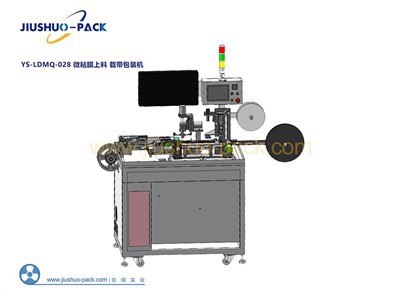
If you’re dealing with adhesion issues, or you’re just looking for a cover tape that works with your specific carrier tape and production setup, hit up our team to chat. We can send you free samples, walk you through that troubleshooting checklist, or adjust our cover tape formula if you have a weird carrier material that’s hard to bond. No hoops, no crazy requirements, just straight talk.
Paper Carrier Tape References:
- Cover Tape Adhesion Fundamentals, Electronic Packaging and Production Association (EPPA)
- Surface Contamination Effects on Polymeric Substrate Adhesion, Journal of Adhesion Science and Technology, 2022
- Storage Conditions Impact on Pressure Sensitive Adhesives for Packaging, Packaging Technology and Science, 2021
- Peel Force Testing Standards for Flexible Packaging, ASTM International, D3330-18
Dongguan Jiushuo Industrial Co., Ltd.
As one of the most professional cover tape manufacturers and suppliers in China, we also support customized service. Please feel free to buy high quality cover tape made in China here from our factory. Contact us for more details.
Address: 11th Floor, Building 2, Chuangfu Center, Chashan Town, Dongguan City, Guangdong Province, China
E-mail: sales06@zaidaiw.com
WebSite: https://www.carriertape-pack.com/
