If you’re a manufacturing, pharmaceutical, food processing, or even agricultural operation relying on a feeding system to get raw materials, ingredients, or finished goods moving at the exact rate you need, you know how frustrating a wonky feeding system can be. One too many lumpy batches, one overfed component that clogs your line, or one underfed part that slows your entire production shift—those are the kind of headaches that eat into profits and make you question if your feeding system is really pulling its weight. As someone who’s built feeding systems for over 10 years now (I’m not some random consultant—my team designs, installs, and troubleshoots these things every single day for factories just like yours), I’ve seen it all. And when it comes to fixing accuracy issues? It’s never as simple as “buy a new sensor” or “turn up the motor.” It’s a mix of small, intentional tweaks, routine checks, and ditching the “set it and forget it” mindset most companies fall into. Let’s break down what actually works to make your feeding system way more accurate, without blowing your budget. Feeding System
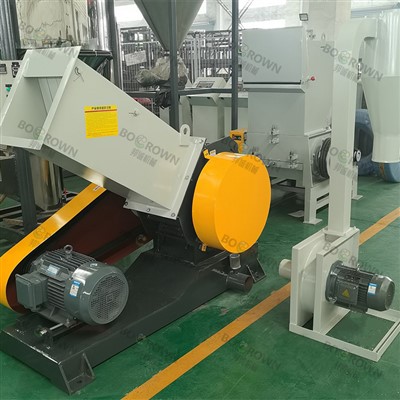
First off, let’s get one thing straight: feeding accuracy isn’t just about measuring how much material comes out. It’s about consistency—getting that exact number, minute after minute, shift after shift. A feeding system that’s 95% accurate on Monday and 82% accuracy by Friday is useless. So let’s start with the basics that most people skip because they’re “too busy” for small checks: calibrating the system on a schedule that actually matters, not just the once a year when OSHA (or your boss) makes you.
Wait, I know what you’re thinking: “We calibrate all the time—what’s the big deal?” Let me tell you, most calibrations I see are lazy. They’re done with a single weight sample, not 10 or 20, because who has time for that? Or they’re only calibrated when the system is empty, not when it’s running at normal capacity, with material flowing and belts stretching. That’s a mistake. Belt stretch alone can throw readings off by 2-5% within the first hour of a run, especially if you’re moving heavy or abrasive materials like grain, plastic pellets, or powdered chemicals. My team recently worked with a cookie bakery that was complaining about 10% variation in their flour feeding—turns out, their calibration was done on a bare belt, not the belt with flour loaded. They recalibrated with flour in the system, and the variation dropped to 1% overnight. No new parts, no big investment—just doing calibration right. Also, don’t forget to calibrate during different operating speeds. If your system runs at 50%, 75%, and 100% speed, you need to calibrate at all three, not just full speed. I’ve seen feeders that are perfect at top speed but underfeed at low speed, which messes up batches where you need slow, steady flow.
Next up, matching your feeding hardware to your material. This is where a lot of companies go wrong: they buy a cheap, one-size-fits-all feeder and expect it to work for everything from fine coffee powder to coarse gravel. Newsflash: fine powders and chunky aggregates need totally different feeding tech. For example, if you’re feeding a super fine, static-prone powder (like pharmaceutical excipients or carbon black), a standard auger feeder will cause it to clump, arch, or stick to the screw, leading to underfeeding. A lot of the time, switching to a vibratory feeder with a shallow, sloped tray that breaks up clumps works way better—no contact between the material and moving parts, so less sticking. I had a client in the 3D printing filament industry who was using a cheap auger feeder for their ABS pellets, and they were getting 8% variation because the pellets would bunch up in the auger. We swapped in a gravimetric vibratory feeder (one that weighs material as it feeds, not just counts rotations) and their accuracy jumped to 0.5% in 2 weeks. Also, pay attention to feeder resolution. If your system is reading material in 10lb increments, you’ll never get accuracy to within 1lb. Make sure the feeder’s sensors have a resolution that’s at least 10x smaller than the accuracy you need. If you need ±0.5lb accuracy, your scale or flow sensor should read to 0.05lb minimum.
Then there’s the control system—this is the brain of the operation, and most companies treat it like an afterthought. A lot of old feeding systems run on basic open-loop controls, which just say “feed at X speed, no matter what.” That’s fine for super simple stuff, but if your line has variable material density (like if you’re feeding crushed rock that’s sometimes compact, sometimes loose), open-loop will never keep up. You need a closed-loop control system that’s actually tuned to your process. What does that mean? It uses real-time feedback from the feeder’s sensors (weight, flow rate, even material consistency) to adjust the motor speed or vibratory force on the fly. But here’s the catch: most controllers come with default tuning settings that are terrible for most processes. A lot of manufacturers set them up for ideal lab conditions, not your messy factory floor. For example, if your feeder has a slight delay (like 0.2 seconds) between adjusting speed and seeing a change in flow rate, the default settings will overcorrect and cause oscillation—your feeder will speed up too much, then slow down too much, leading to wobbly flow. My team usually does a “tune test” where we run the feeder at a steady rate, record flow data for an hour, and tweak the control’s proportional-integral-derivative (PID) settings to match that delay. It takes 2-3 hours, and it’s the difference between a feeder that’s stable and one that’s chasing its tail. Also, if you’re using a PLC (programmable logic controller) to run your line, don’t just load the standard feeding module. Customize it to account for your material’s unique quirks—like pauses between batches, or different materials switching mid-shift. I worked with a chemical plant that was switching between 5 different powders every 2 hours, and their control system would reset every switch, leading to 15% variation. We added a “material profile” feature that saves PID settings for each powder, so when they switch, the controller just pulls the right profile instead of starting over. Problem solved.
Don’t sleep on maintenance—this is the most overlooked part of feeding accuracy, bar none. Most teams do basic cleaning once a month and call it good, but small, gradual wear and tear kills accuracy over time. Let’s start with the moving parts: belts stretch, auger flights wear down, vibratory coils get dirty, and bearings get gritty from material dust. For example, an auger that’s worn down 10% on the flights will deliver 10% less material per rotation, even if you’re spinning it at the same speed. A lot of companies only replace augers when they break, but by then, accuracy is already garbage. We recommend a quarterly inspection of wear parts, and replacing augers, belts, and vibratory trays before they show 5% wear. Also, cleaning isn’t just about preventing cross-contamination—it’s about keeping material from sticking. A tiny layer of dried powder on an auger can throw off flow by 3%, because the material doesn’t slide smoothly. I had a client in the baby food industry who was getting consistent variation because their auger was caked with apple puree residue—they switched to food-grade, daily disassembly and ultrasonic cleaning, and their accuracy improved by 7%. Also, check for material build-up in hoppers. Hoppers are designed to funnel material into the feeder, but if material sticks to the walls, it causes arching (no material flows at all) or rat-holing (only material in the center flows, leaving clumps on the sides). Installing bin activators or air blasts in the hopper (tuned to your material) breaks up arching, and that alone can cut accuracy issues by half. We worked with a grain processor that had 20% accuracy issues from arching—adding low-pressure air blasts that fire every 10 seconds dropped variation to 1%. It’s a $500 fix, not a $50,000 new feeder.
Wait, what about common edge cases that people forget? Like temperature and humidity. If you’re feeding a hygroscopic material (one that absorbs moisture from air, like sugar or flour), a 10% jump in humidity can make the material stick together, change density, and flow differently. We recently had a coffee roaster client who saw their feeding accuracy drop 4% on rainy days, when humidity hit 70%. We installed small desiccant dryers near the feeder hopper to keep the material at consistent moisture levels, and that fixed the issue. Also, material density changes: if your raw material is coming from different suppliers, even the same “10lb per cubic foot” powder can vary by 5% in density, which throws off volumetric feeders. If you’re switching between suppliers, you need to either adjust the feeder rate or switch to gravimetric feeding (which measures weight, not volume, so density doesn’t matter). Volumetric feeders are cheap and simple, but only good if your material density is 100% consistent. Gravimetric is more accurate, and worth the extra cost if you’re dealing with variable materials.
Let’s talk about mistakes I see all the time that make people think their feeder is broken, when it’s just user error. Like, someone will manually adjust the feeder speed every time the line slows down, without recording what they set it at. Then they forget what they did, and next shift, it’s off. Or they’ll adjust the flow rate mid-run without taking a measurement. I always tell clients: never tweak the feeder unless you have a weight sample to go by. If you think it’s off, stop the line, collect 10 samples of 1 minute of flow each, weigh them, and adjust based on that data—not a hunch. Another big one: overloading the hopper. If the hopper is always full to the brim, the weight on the feeder changes, which changes the motor speed or vibratory force. Most feeders are calibrated for a specific hopper level (like 20-80% full), so keeping the level consistent prevents that variation. We add level sensors to our feeders that alert operators when the hopper is too full or too empty, so they don’t have to guess.
At the end of the day, improving feeding accuracy isn’t about buying the shiniest, most expensive feeder on the market. It’s about working with what you have, doing small, consistent checks, tuning your system to your exact process, and not ignoring the tiny, annoying issues that add up to big problems. I’ve seen clients go from 12% accuracy to 0.8% accuracy with a $1,000 calibration and tune-up, and I’ve seen others drop $50k on a new feeder that still has the same issues because they skipped maintenance and calibration.
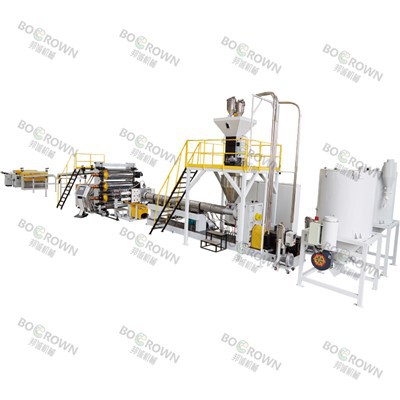
If you’re dealing with feeding accuracy issues, or you’re not sure if your current system is performing as well as it should, we can help. Our team doesn’t just sell feeders—we audit your whole process, tweak what you already have, and set up a routine that keeps your accuracy steady shift after shift. No fluff, no long sales pitches, just real fixes for real factory problems. Reach out to us to talk through your needs, and we’ll give you a clear, honest plan to get your feeding system on track.
PVC Automatic Mixing System References
- Association for Advancing Automation. (2022). Best Practices for Gravimetric Feeding Accuracy in Industrial Processes.
- ASABE Standards. (2021). Design and Calibration of Feeding Systems for Agricultural and Food Processing Equipment.
- Miller, T. (2023). Reducing Feeding Variation: The Impact of Control Tuning and Routine Maintenance. Journal of Industrial Process Automation.
- Occupational Safety and Health Administration (OSHA). (2020). Calibration and Maintenance of Process Equipment for Consistent Production.
- Zhang, L., et al. (2022). Material-Specific Feeding Solutions for Fine Powders and Granular Materials. Powder Technology.
ZJG BC Machinery Co., Ltd.
As one of the most professional feeding system manufacturers and suppliers in China, we’re featured by quality products and good price. Please rest assured to buy cost-efficient feeding system for sale here from our factory. Contact us for custom service and OEM service.
Address: No.8 Lexi Road, Leyu Town, Zhangjiagang City
E-mail: sales@bcextruder.com
WebSite: https://www.bcextruder.com/
