Hey there, food lovers and plant-based crew! Let’s cut to the chase—if you’ve ever been deep in the weeds of natural food colorings, you’ve probably stumbled on Monascus Yellow. And if you’re a vegetarian (or just someone who cares about what’s in their snacks, sauces, or even cosmetics), you’ve definitely asked: Is this stuff actually veggie-friendly? As someone who’s been knee-deep in Monascus Yellow production for years—guiding my team, tweaking processes, and chatting with every baker, sauce maker, and snack brand that hits us up— I’ve heard this question so many times. Today, I’m breaking it down no fancy jargon, just real talk: what Monascus Yellow is, how it’s made, if it’s actually suitable for vegetarians, and why that matters way more than you might think. Monascus Yellow
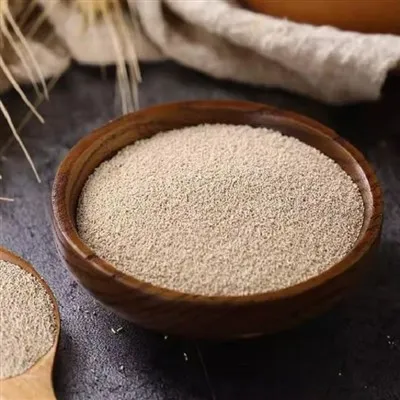
First off, let’s start with the basics because I don’t want anyone confused. Monascus Yellow is a natural, yellow-orange food coloring that pops up in all kinds of products. You’ll find it in things like tofu, pickled veggies, rice wine, snack coatings, candy, even some makeup (it’s great for that warm, golden pigment without harsh chemicals). Unlike synthetic yellows, it’s made from a living organism—so that’s where a lot of the confusion starts. People assume if it’s “fungal,” it’s automatically non-veggie? Wait, hold on—fungi aren’t animals, right? But let’s not jump ahead because that’s only part of the story.
The big question everyone’s really asking is: How is Monascus Yellow actually manufactured? Because that’s the make-or-break for vegetarian suitability, not just the end product itself. Let me tell you how we do it at our facility (and yeah, this is the part where I spill real, day-to-day details, not textbook stuff). First, we use Monascus purpureus or Monascus aurantiacus—those are the specific fungal strains we work with, not some random mold found in a damp basement. These are food-grade strains, tested and approved for human consumption everywhere from the EU to the US, so no sketchy stuff here.
Here’s the process, simplified: We grow the fungi in a controlled, sterile environment—strictly a liquid or solid substrate, depending on the batch. For our standard vegetarian-grade Monascus Yellow, that substrate is plant-based, no animal products at all. Think rice, maybe a little sugarcane molasses, all plant-derived. We feed the fungi that, they produce the pigments as part of their natural metabolic process, we harvest the pigments, filter out the fungal mycelium (the “body” of the fungus), and then dry it into a powder or oil-soluble version, whatever the customer needs. No animals are harmed, no animal byproducts are used in the production chain at all.
But wait—there’s a catch, because not all Monascus Yellow is made this way. That’s the secret most suppliers won’t tell you. Some budget-grade Monascus Yellow uses animal-derived components in the substrate or processing. I’ve had customers come to me panicking because they bought a cheap batch from overseas that had hidden animal stuff, and they had to yank it from their product lines last minute. How does that happen? A lot of fly-by-night suppliers use peptone (a protein extracted from animal tissues, like pork or beef) in their fungal growth medium because it’s cheaper and grows faster. Or they use gelatin as a stabilizer during processing. That’s a problem, obviously—gelatin is straight animal-derived, so that would make the whole thing non-vegetarian. Or worse, they use fungal strains that are contaminated with animal matter, though that’s rare these days, but still a risk.
So let’s get back to the core question: Is Monascus Yellow suitable for vegetarians? The short answer is: Most of the time, if it’s made correctly with plant-based substrates and no animal additives, YES. But you have to do your homework, because not all batches are the same. Let’s talk about the vegetarian definition here—for strict vegetarians, that means no meat, dairy, eggs, or any animal byproducts, right? So Monascus Yellow that’s 100% plant-sourced in every step? That’s perfect. The stuff with peptone or gelatin? No, that’s a hard pass.
I’ve seen so much misinformation online, too. Some folks think all fungal products are non-veggie, but that’s not true. Yeast is a fungus, and you don’t see anyone side-eyeing bread or beer, right? Same logic here. The key is the input materials, not the organism itself. Fungi are their own kingdom, separate from plants and animals, so fungal-derived products don’t automatically conflict with vegetarian diets—what matters is what you use to grow them and process them.
Now, let’s talk about why this is such a big deal right now. Plant-based eating isn’t a fad anymore—it’s a huge market. More and more consumers are checking labels, brands are scrambling to source ingredients that align with their values, and natural colorings are replacing synthetic ones because people hate adding “unpronounceable chemicals” to their food. Monascus Yellow is perfect for that because it’s stable, it doesn’t fade in light or heat, and it gives that warm golden hue that no synthetic yellow can replicate naturally. But if a brand uses a Monascus Yellow that’s not vegetarian, they’re alienating a huge chunk of their customer base—we’re talking millions of vegetarians worldwide, plus flexitarians who prioritize plant-based options.
I’ve had so many brand owners reach out to me specifically because they messed up this step before. One snack company told me they switched to a cheaper Monascus Yellow, only to get hundreds of customer complaints saying it wasn’t veggie-friendly. They had to pull the product, redo the packaging, and lost thousands in sales. That’s the kind of mistake you don’t want to make, especially when there are suppliers like us who specialize in vegetarian-grade Monascus Yellow. We test every single batch for animal derivatives—we send samples to third-party labs to check for traces of gelatin, peptone, dairy, anything that would make it unsuitable for vegetarians. We keep full records of every ingredient we use in the substrate, every processing step, so our customers can show their own auditors exactly where the product comes from.
Wait, let’s address another common question: Is Monascus Yellow vegan too? A lot of vegetarians are also vegan, so that’s a good add-on. For vegan standards, it’s even stricter—no animal products at all, including honey, dairy, eggs, etc. Our Monascus Yellow is vegan-friendly too, because we don’t use any of those things either. Our substrate is strictly plant-based, no honey, no animal-derived additives, so that works for both vegetarians and vegans.
But here’s the thing—even with all this, it’s not all sunshine and rainbows. Some people still have concerns about Monascus Yellow overall, regardless of being veg or not. A while back, there was a fuss about Monascus purpureus (the same strain we use) containing monacolins, which are compounds that lower cholesterol. That’s a plus for some people, but if you’re on cholesterol medication, you have to check with your doctor. But that’s unrelated to being vegetarian, so I just mention it as a side note for anyone who’s curious. No, it doesn’t make it non-veggie—it just means you should be aware if you have certain health conditions.
Another concern I hear: Is Monascus Yellow safe? For food-grade versions, absolutely. The FDA has it on the GRAS (Generally Recognized as Safe) list, the EFSA (European Food Safety Authority) approved it for use, and we follow all their strict guidelines. Our products are tested for heavy metals, mycotoxins, everything—so it’s safe for anyone, whether vegetarian or not.
Now, let’s wrap this up, because I know you’re probably ready to move from “is this suitable” to “where do I get the good stuff.” If you’re a brand owner, a food manufacturer, even a small-batch maker like a home baker who uses natural colorings—if you need a reliable, vegetarian (and vegan!) Monascus Yellow that’s not cut corners, that’s traceable, that’s tested every step of the way—hit us up. We’re not here to push a one-size-fits-all product; we work with you to make the exact batch you need, whether you’re making organic tofu, plant-based candy, savory sauces, whatever. We understand that your customers trust you, and we trust our products to live up to that.
Here’s the bottom line: Monascus Yellow can absolutely be suitable for vegetarians. It just depends on who makes it, how they make it, and what they use along the supply chain. Don’t assume every batch is the same—do your research, ask your supplier for documentation, and if you see red flags (words like “peptone” or “gelatin” on the spec sheet), run the other way. At the end of the day, food should be something you can feel good about eating, whether you’re a vegetarian, a meat-eater, or somewhere in between.
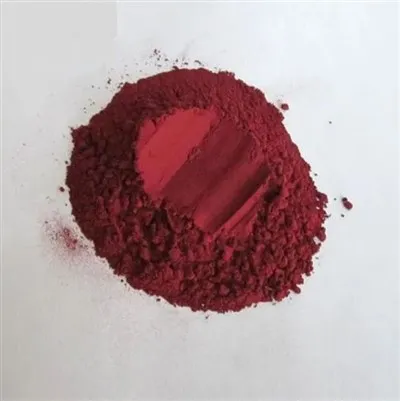
If you’re ready to source a Monascus Yellow that aligns with your vegetarian needs, or you just have more questions about how we produce our batches, don’t hesitate to reach out. We’re here to help, because at the end of the day, we’re all in this to make good, transparent food.
Thickeners References:
- Food and Drug Administration. (2024). GRAS Notices: Monascus Color Pigments.
- European Food Safety Authority. (2021). Scientific Opinion on the safety of Monascus pigments as a food additive.
- The Vegetarian Resource Group. (2023). Guide to Natural Food Colorings for Vegetarians and Vegans.
- Zhang, L. et al. (2022). Production of vegetarian-grade Monascus pigments via plant-based fermentation media. Journal of Food Science and Technology.
Fudijia (Tianjin) Supply Chain Co., Ltd.
With abundant experience, we re one of the most professional monascus yellow manufacturers and suppliers in China. We warmly welcome you to wholesale bulk high quality monascus yellow made in China here from our factory. For more information, contact us now.
Address: 301-2-1C,Jin Bin Jie Zuo,No.98, Huanghai Road,TEDA, Tianjin, China
E-mail: foodchem@hjlfoods.com
WebSite: https://www.ifoodchem.com/
