If you’re reading this, chances are you’re staring down two things at once: the need for reliable power and a humid environment that feels like it’s on a different continent’s clock. Maybe you’re in coastal Florida, a steamy industrial port in Southeast Asia, a rain-soaked mining camp in the Amazon basin, or even a sweltering warehouse in a city where “dry season” is just a myth. I get it—humidity doesn’t just make you sweat through your shirt, it makes you second-guess every big decision, especially one as critical as installing a generator. Cummins Generator Sets

Let’s cut to the chase: Yes, you can install a Cummins generator set in a humid environment. But before you go firing up the order button, there’s a lot to talk about—stuff that’s not in the generic product specs, stuff we deal with every single day as a Cummins supplier. I’m not some corporate drone regurgitating marketing brochures; I’m the guy who gets calls at 2 a.m. from clients in Jakarta whose genset fried last monsoon, or from a hotel in Hawaii that’s been fighting corrosion for years. Let’s break this down like we’re sitting at a desk with a cold coffee (or a hot one, if that’s your vibe) and a whiteboard full of real-world problems.
First, let’s get one thing straight: Humidity is a problem, but it’s manageable. Not all humidity is created equal, either. There’s the “stick to your skin just walking outside” kind like we get in the Gulf Coast, where relative humidity hangs around 80-90% year-round, and then there’s the “sudden downpour that drops humidity 20% in 10 minutes” kind, like in tropical rainforests or monsoon regions. The worst combo? High heat and high humidity, because that slows down condensation and rust—wait, no, actually, it speeds up. When the air is thick with moisture, metal parts that aren’t sealed tight don’t just get a little damp; they can start corroding in days, not weeks. Electronics? They hate humidity even more. A tiny bit of moisture creeping into a control panel? That’s a dead genset before you even need it.
Here’s where Cummins actually has your back, but only if you work with someone who knows how to ask for the right features. Most people don’t realize that Cummins doesn’t make a one-size-fits-all generator. We source units with different base configurations, but we can spec them out specifically for humid environments. Let’s talk about the big three things that matter for moisture: corrosion resistance, ventilation, and electrical protection.
First, corrosion. Humidity + metal = rust, plain and simple. Cummins gensets use different metals for different parts—aluminum, steel, copper, even some stainless steel. But in super humid areas, regular steel frame parts will corrode if you don’t coat them right. That’s why we push for units with powder-coated steel frames, not just painted ones. Powder coating is way thicker, so it doesn’t chip or peel when the temperature swings (which is super common in humid places—one day it’s 90 and sticky, the next a cool front rolls in and leaves condensation all over everything). We also make sure the exhaust system is made from galvanized steel or even stainless steel. The exhaust pipe gets super hot, but when it cools down, all that moisture in the air condenses inside it. If it’s not coated, that’s rust eating away at the pipe from the inside out. I’ve seen a genset in Singapore where the exhaust pipe rusted through in 18 months—because the client didn’t ask for the upgrade. Don’t let that be you.
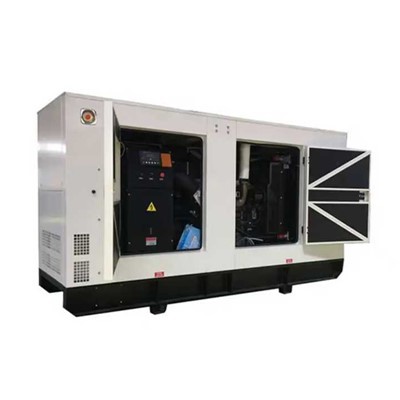
Then there’s ventilation. Wait, how does humidity and ventilation go together? Because if your generator is trapped in a box with no airflow, the hot air it makes mixes with the moist outside air, creating a breeding ground for condensation. That’s why you can’t just stick a Cummins genset in a generic shed and call it a day. You need what’s called a “weatherproof enclosure” but not just any enclosure—one with proper vents that are designed to keep water out and let hot, moist air escape. A lot of suppliers just slap a metal box on a genset and call it weatherproof, but if the vents are too small, you get condensation buildup. If they’re too big, rain gets in. Cummins has specific vent kits made for high-humidity areas that balance that perfectly. Also, if your genset is going to be sitting idle a lot (like a backup for a hospital or a data center that only uses it during blackouts), we recommend adding a space heater inside the enclosure. Not a big, energy-hungry one—just a small thermostatically controlled heater that kicks on when the enclosure’s temperature drops below a certain point. Why? Because when it’s cool, moisture turns into water; a little heat keeps it above the dew point, so condensation never forms. That’s a trick we learned from a hospital in Miami that was having issues with their backup genset triggering false faults from moisture.
Electrical protection is the next big one. This is where most people mess up. The control panel, the wiring harness, the circuit breaker—all of these are vulnerable to moisture. In high humidity, water can creep into tiny cracks in wiring insulation, or build up on control board connections, leading to short circuits. Cummins makes control panels with conformal coating— a thin, protective layer that goes over all the electronic components, keeping moisture out without messing with how the panel works. That’s non-negotiable in humid environments. Also, we always spec marine-grade wiring harnesses for these jobs. Regular wiring is fine in dry climates, but marine-grade is coated in a waterproof, UV-resistant material that stands up to constant humidity and even salt air (if you’re near the coast, salt is a whole other problem— but that’s a post for another day). Another thing we suggest: if your genset is outside, get it elevated at least 12 inches off the ground. That way, if there’s a heavy rain or flooding (super common in humid low-lying areas), water doesn’t pool around the base of the unit and seep into the connections. I know a plant in Thailand that didn’t elevate their genset; during a monsoon, the ground flooded, and water got into the battery compartment. The battery died, and they lost power for 3 hours waiting for a replacement. That’s a $10,000+ loss for a factory that runs 24/7. Don’t skip the elevation.
Wait, let’s talk about maintenance, because that’s half the battle. A generator in a humid environment isn’t a set-it-and-forget-it kind of thing. Cummins has specific maintenance schedules for high-humidity applications, and as your supplier, we don’t just sell you the unit and dip. We send our techs out every 6 months (instead of the usual 12) to do extra checks: wipe down all the metal parts to prevent surface rust, test the conformal coating on the control panel, check for any water buildup in the fuel tank, and make sure the vent heaters are working. Oh, right—the fuel tank! Humidity can get into fuel, too. If there’s water in your diesel, that’s a dead engine. We always add water separators to the fuel system when we spec a genset for a humid area, and we recommend draining the water from the separator every month, not every 3. That’s a small step that makes a huge difference. I’ve seen clients skip that, end up with contaminated fuel, and have to pay thousands to flush the engine. Not worth it.
Is there a time when installing a Cummins genset in a humid environment is a bad idea? Honestly, almost never—if you do it right. The only times I tell clients to wait are if they’re cutting corners, trying to use a standard unit without upgrades, or trying to install it themselves. Cummins gensets are built to handle harsh conditions, but you need to work with a supplier who knows how to adapt them to your specific environment. That’s not every supplier— a lot of them just sell whatever’s in stock and don’t care about the long-term issues.
Let me give you a real example. Last year, a client in Panama reached out to us because their old (non-Cummins) genset had died during a peak rain season, costing them $50,000 in lost sales for their coffee export business. They were skeptical at first—“We tried a humid-rated genset before and it still broke.” But when we looked at their setup, it was a standard genset in a flimsy enclosure with no space heater, no conformal coating, and the exhaust pipe was regular steel. We spec’d them a Cummins QSK19, with a powder-coated frame, stainless steel exhaust, marine-grade wiring, a fully weatherproof enclosure with thermostatically controlled vents, a conformal-coated control panel, and a small space heater inside the enclosure. We also trained their maintenance team to check the water separators monthly and wipe down the unit every week. Six months later, they sent us a note saying the genset ran flawlessly through the heaviest monsoon in 5 years. That’s the difference between doing it right and cutting corners.
Now, let’s be clear: this isn’t rocket science, but it is specific. If you Google “Cummins generator humid environment,” you’ll get a bunch of generic articles that say “choose a weatherproof unit” or “maintain regularly.” But the details matter. Powder coating vs. regular paint. Conformal coating vs. no coating. Marine-grade wiring vs. regular wiring. A space heater vs. no heater. These are the things that make the difference between a genset that works for 10 years and one that dies in 2.
So, to answer the original question: Can you install a Cummins generator set in a humid environment? 100% yes. But only if you partner with a supplier who knows the ins and outs of high-moisture applications, not just someone pushing the cheapest unit. We don’t just sell gensets—we help you figure out exactly what upgrades you need for your specific location, train your team on maintenance, and stand by the unit long after it’s installed.
If you’re dealing with high humidity, heavy rain, or just the constant threat of moisture ruining your power setup, don’t guess. Reach out to us to talk through your needs. We’ll walk you through the specific upgrades for your area, answer any questions you have about installation, and make sure you get a genset that will work reliably when you need it most.
Cummins Construction Engines References
Cummins Inc. (2022). Genset Environmental Applications: Humidity and Corrosion Mitigation. Power Generation Technical Manual, Series 4000.
International Electrotechnical Commission (IEC). (2021). Standard 60034-1: Rotating Electrical Machines – Rating and Performance. High Humidity Environment Requirements.
American Society of Mechanical Engineers (ASME). (2020). Corrosion Control for Industrial Equipment in Tropical Climates. ASME Maintenance Guidelines, Volume 12.
Chongqing FuDiKorn Engine Co., Ltd.
As one of the leading cummins generator sets manufacturers in China, we are specialized in providing high quality customized service. We warmly welcome you to buy discount cummins generator sets in stock here and get quotation from our factory. Quality products and low price are available.
Address: No. 68, Jiujiang Road, Shuangfu Street, Jiangjin District,Chongqing City, China (Building 7, Kunhuang International Science and Technology Industrial Park)
E-mail: info@fudikorn-engine.com
WebSite: https://www.fudikornengine.com/
