Hey there! I’m a supplier in the castings business, and I often get asked about the differences between centrifugal casting and other casting methods. So, I thought I’d take a stab at breaking it down in a way that’s easy to understand. Castings
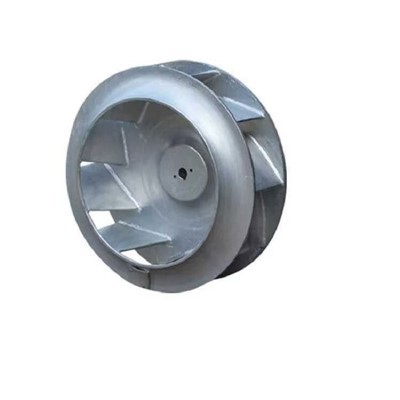
Let’s start with the basics. Casting is a process where we pour molten metal into a mold to create a specific shape. There are several types of casting methods out there, but today, we’re going to focus on centrifugal casting and compare it to some of the more common ones, like sand casting, investment casting, and die casting.
Centrifugal Casting
Centrifugal casting is a unique method that uses centrifugal force to distribute the molten metal evenly throughout the mold. Here’s how it works. First, we heat the metal until it’s in a molten state. Then, we pour it into a rotating mold. The mold spins at high speeds, creating a centrifugal force that pushes the molten metal against the walls of the mold. This force helps to fill even the smallest details of the mold and also eliminates any air bubbles or impurities, resulting in a high – quality, dense casting.
One of the biggest advantages of centrifugal casting is its ability to produce cylindrical or tubular shapes with excellent concentricity. For example, if you need a long, seamless pipe or a large – diameter cylinder, centrifugal casting is the way to go. The centrifugal force ensures that the walls of the casting are of uniform thickness, which is crucial for applications where strength and precision are important.
Another great thing about centrifugal casting is its efficiency. Since the centrifugal force helps to fill the mold quickly and completely, we can produce large – scale castings in a relatively short amount of time. This makes it a cost – effective option for high – volume production.
However, centrifugal casting does have its limitations. It’s mainly suitable for cylindrical or round shapes, so if you need a complex, irregular shape, you might want to look into other methods. Also, the equipment required for centrifugal casting can be quite expensive, which means there’s a higher initial investment.
Sand Casting
Sand casting is one of the oldest and most common casting methods. In sand casting, we create a mold out of sand and then pour the molten metal into it. The sand mold is made up of two parts, a cope and a drag, which are joined together to form the cavity for the casting.
One of the main advantages of sand casting is its versatility. We can use sand casting to create almost any shape, no matter how complex. This makes it a popular choice for prototyping and small – scale production. Sand is also a relatively inexpensive material, so the overall cost of sand casting can be quite low.
But sand casting also has some drawbacks. The surface finish of sand – cast parts is usually not as smooth as those produced by other methods. There’s also a higher risk of porosity and other defects, which can affect the strength and quality of the casting. And since the sand mold is destroyed after each casting, it’s not very efficient for high – volume production.
Investment Casting
Investment casting, also known as the lost – wax process, is a precision casting method. Here’s how it works. First, we create a wax pattern of the part we want to cast. Then, we coat the wax pattern with a ceramic shell. After the ceramic shell hardens, we melt the wax out, leaving behind a cavity in the shape of the part. Finally, we pour the molten metal into the cavity and let it cool.
Investment casting is known for its high precision and excellent surface finish. We can produce parts with very fine details and tight tolerances, which makes it ideal for industries like aerospace and medical. The process also allows for a wide range of metal alloys to be used.
On the downside, investment casting is a time – consuming and expensive process. The multiple steps involved in creating the ceramic shell and removing the wax pattern add to the cost and production time. It’s also not very suitable for producing large – scale parts.
Die Casting
Die casting is a process where we force the molten metal into a steel mold, called a die, under high pressure. The die is typically made up of two halves that are machined to the shape of the part. Once the metal has solidified, the die opens, and the casting is ejected.
Die casting is great for high – volume production. It’s a very fast process, and we can produce parts with a high degree of accuracy and repeatability. The surface finish of die – cast parts is usually quite good, and we can also add features like threads and logos during the casting process.
However, die casting has its limitations. The initial cost of creating the steel die is very high, which makes it less cost – effective for small – scale production. There are also restrictions on the size and shape of the parts that can be produced, and certain metal alloys may not be suitable for die casting.
Comparing to Centrifugal Casting
When we compare centrifugal casting to sand casting, we can see that while sand casting is more versatile in terms of shape, centrifugal casting offers better quality and efficiency for cylindrical shapes. The dense structure and uniform wall thickness achieved in centrifugal casting are hard to match with sand casting.
In comparison to investment casting, centrifugal casting is more suitable for high – volume production of larger, cylindrical parts. Investment casting, on the other hand, shines when it comes to high – precision, small – scale parts with complex details.
When it comes to die casting, centrifugal casting is better for parts that require large diameters or long lengths. Die casting is more focused on smaller, high – volume, and highly precise parts, but the upfront cost of the die can be a significant barrier.
Conclusion

So, as you can see, each casting method has its own strengths and weaknesses. Centrifugal casting is a fantastic option when you need high – quality, cylindrical or tubular castings for high – volume production. But if you’re looking for complex shapes, high precision in small parts, or a cost – effective solution for prototyping, other methods might be more suitable.
Valve Castings As a castings supplier, I’m here to help you choose the right casting method for your specific needs. Whether you’re in the automotive, aerospace, or any other industry, I can provide you with top – notch castings that meet your quality and budget requirements. If you’re interested in purchasing castings or just want to have a chat about which method is best for your project, don’t hesitate to reach out. I’m always ready to assist you in finding the perfect casting solution.
References
- ASM Handbook: Casting, Volume 15, ASM International
- "Casting, Forming & Welding Handbook", Industrial Press Inc.
- "Manufacturing Engineering & Technology" by Serope Kalpakjian and Steven R. Schmid.
Shandong Shunye Stainless Steel Co., Ltd.
Shandong Shunye Stainless Steel Co., Ltd. is one of the most professional castings manufacturers and suppliers in China, also supports customized service. Welcome to buy bulk cheap castings made in China here and get quotation from our factory. For price consultation, contact us.
Address: Shandong Province, Binzhou City, Wudi County, Liubao Town, Zhangdong Road, Duliucun Village
E-mail: sales@wdshunye.com
WebSite: https://www.shunyecasting.com/
