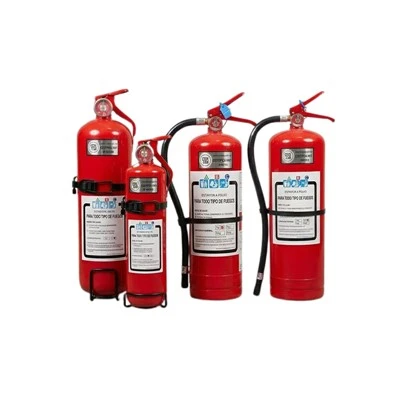
Hey everyone, let’s cut to the chase because fire safety is the last thing you want to overcomplicate—especially when it comes to electrical fires. I’m Mike, and I’ve been selling dry powder fire extinguishers for over 8 years, so I’ve heard every question under the sun from electricians, café owners, gym managers, even homeowners who accidentally plug too many space heaters into one outlet. The one that comes up all the time is: “Are dry powder fire extinguishers actually good for electrical fires?” Dry Powder Fire Extinguishers
Let’s start with what happens when an electrical fire starts. You have a live wire, current flowing through it, and a fuel source (that overheated outlet, frayed phone charger, or server rack in the office) all combined. If you use the wrong extinguisher here, you’re not just putting out the fire—you could be setting yourself up for a shock or making the fire way worse. That’s where people mix things up, mostly because they saw on TV that water puts out fires… but water and electricity do not play nice. No exceptions.
Now, dry powder extinguishers—let’s get specific, because not all dry powder is the same, right? I sell the ABC type (that’s the one with the multi-purpose powder, usually monoammonium phosphate) and also the ones designed specifically for electrical fires, but more on that in a sec. Back to electrical fires: when you discharge dry powder, it coats the live electrical part. It stops the oxygen from feeding the fire, and it also insulates the area so the current can’t jump to you or anything flammable nearby. That’s way better than CO2 extinguishers a lot of the time, which people also throw around as electrical fire fixes. CO2 works, but it’s only great for small, contained fires—if there’s a big, messy electrical blaze in a server room full of cables, CO2 just dissipates fast, you have to be super precise with the hose, and it can make the area too cold, which might damage expensive gear (we’ve had a few clients come to us after a CO2 fire put out an outlet but ruined their $2k POS system—dry powder doesn’t do that kind of collateral damage, not when used right).
Wait, but hold up—let’s talk about the limits here, because I don’t want to overhype this. Dry powder is not for electrical fires that have already spread to ordinary combustibles, like paper or wood. That’s the ABC’s job—when it’s a mix of electrical and regular fire, it works perfectly. But if the fire’s so big that the wires are exposed and arcing across the room, don’t grab the extinguisher and run in yelling. Call the fire department first. That’s non-negotiable. I’ve had a customer who tried to put out a server rack fire with a dry powder, and he said it worked on the small part that started on the cord, but once the server’s internal parts blew, he bailed and called 911—smart move. The extinguisher buys you time, it doesn’t replace professional help.
Another big thing people get wrong: how to use the dry powder extinguisher on an electrical fire. You can’t wait for the power to be turned off, right? Wait—actually, you should, if it’s safe to do so. If the outlet’s on a breaker that’s easy to flip (and you’re not standing in water, and the power’s not arcing everywhere), kill the power first. But if it’s a live wire behind a wall that you can’t safely turn off? Dry powder is your only safe bet here. Water would electrocute you, foam (another extinguisher type) conducts electricity too, so that’s a hard pass. I’ve trained every single client that buys from us: stand at least 6 feet back from the fire, aim the nozzle at the base of the flames (not the top—duh, but so many people do this), and sweep side to side. And don’t worry about the powder mess— it’s easy to wipe up, way easier than replacing a fried fridge or getting hospitalized.
Let’s address the “but I heard dry powder leaves a residue” argument, because that’s the number one complaint I get from office managers. Yeah, it does leave a fine white coating, but that’s nothing compared to the alternative. If you use water or foam, you’ve got gallons of water seeping into walls, ruining wiring, and causing way more damage than the powder. CO2 might leave no residue, but like I said, it’s only for tiny fires. And the residue? It’s non-corrosive when it’s the ABC type we sell—we test every batch, and we include a clean-up cloth with every residential kit because we care about the hassle not being a nightmare. Business clients love that it’s easy to vacuum or wipe off electronics after the fire is out, as long as you don’t let it sit for months.
Wait, what about other types of dry powder extinguishers, like the BC ones? Those have sodium bicarbonate, right? They’re also great for electrical fires because they don’t leave that sticky (well, less sticky) residue, perfect for places with sensitive gear like recording studios or labs. I used to only sell ABC, but after a couple of recording studios switched to BC and called saying they saved their $100k sound boards, I started stocking both. So it’s not a one-size-fits-all, but both work for electrical fires—just depends on your space.
Let’s bust a common myth right now: people think that once an electrical fire is out, it won’t reignite. That’s not true, and dry powder doesn’t fix that on its own. The powder smothers the fire, but you still need to check the area for hot spots—use a flashlight, look for glowing wires, maybe a second small flame hiding behind a power strip. I always tell clients to keep an eye on the area for at least 30 minutes after using the extinguisher. If you smell something burning again, don’t hesitate to grab the extinguisher again (it’s designed for that) or call the fire department.
I’ve seen way too many near-misses because someone grabbed a water extinguisher for an electrical fire. A guy last year told me he tried to put out a kitchen outlet fire with a garden hose, and he got a shock so bad he dropped the hose—thankfully he wasn’t hurt, but his wall was charred and the kitchen was out of commission for a week. If he’d had a dry powder extinguisher, he could’ve stopped it before it spread to the cabinets. That’s the stuff that makes me proud to sell these—they’re not just a product, they’re a safety tool.
Now, when shouldn’t you use a dry powder extinguisher on an electrical fire? Like I said, if the fire is larger than a small appliance or outlet. If you can’t see the base of the flames because it’s spread to the ceiling, get out. Also, never use a dry powder extinguisher on a fire in a gas line or flammable liquids, but that’s not an electrical fire thing—common sense.
At the end of the day, dry powder fire extinguishers are one of the safest, most reliable tools you can have for electrical fires. They’re accessible, easy to use even if you’ve never been trained, and they don’t pose the same shock risk as water or foam. But here’s the thing—don’t just take my word for it. Talk to electricians, fire marshals, anyone who deals with this stuff daily. They’ll tell you the same thing: for electrical fires, dry powder is a go-to choice, as long as you use it correctly and know its limits.
If you’re a homeowner, small business owner, or facility manager and you’re not sure which dry powder extinguisher is right for your space—whether you need one for your garage, your office, or your server room—hit us up to chat. We’ll walk you through the difference between ABC and BC, how many you need, where to mount them, and even share free resources on fire safety basics so you feel confident, not confused. Fire safety doesn’t have to be scary, and you don’t have to figure it out alone.
References
Fire Alarm NFPA 10: Standard for Portable Fire Extinguishers
US Fire Administration: Electrical Fire Safety Guidelines
Occupational Safety and Health Administration (OSHA): Fire Protection for Electrical Equipment
Shaoxing Weimin Fire Fighting Equipment Co., Ltd.
Shaoxing Weimin Fire Fighting Equipment Co., Ltd. is one of the most professional dry powder fire extinguishers manufacturers and suppliers in China, also supports customized service with low price. Welcome to buy discount dry powder fire extinguishers in stock here and get quotation from our factory. 5 years warranty is available.
Address: CHINA
E-mail: info@weiminfire.com
WebSite: https://www.weiminfire.com/
