If you’ve ever wondered how the oil and gas industry keeps operations running smoothly in some of the harshest, most demanding environments on Earth, U-tube heat exchangers are quietly doing the heavy lifting. As a supplier who’s spent the last decade designing and manufacturing these units for upstream drilling rigs, midstream pipeline facilities, and downstream refineries, I’ve seen firsthand how these versatile pieces of equipment solve problems that other heat transfer systems can’t. When I first started in this field, I’ll admit I didn’t fully grasp how integral U-tube exchangers are to every stage of oil and gas production—until a client on a North Sea drilling rig called me at 2 a.m. to say their straight-tube exchanger had failed, and they needed a replacement that could handle freezing temperatures and constant pressure fluctuations. That experience stuck with me, and it’s why I’m excited to break down exactly where U-tube heat exchangers make the biggest difference in oil and gas, beyond just the basic “they transfer heat” line. U-Tube Heat Exchangers

Let’s start with the upstream side—exploration and production (E&P), where oil and gas are pulled out of the ground. This is the most unforgiving part of the industry, with equipment operating in environments ranging from sub-zero Arctic onshore fields to high-temperature, high-pressure (HTHP) deepwater wells. One of the most critical applications here is wellstream cooling. When hydrocarbons are brought to the surface, they come mixed with water, gas, and impurities, and they’re often at scalding temperatures—sometimes over 300°F, depending on the well. If that wellstream isn’t cooled, it can cause issues like corrosion in pipelines, damage to separation equipment, or even safety hazards from overpressure. U-tube exchangers are perfect for this because their design lets us customize tube bundles to fit the tight spaces on offshore drilling platforms, where every square foot is precious. Unlike straight-tube exchangers, which can get bound if thermal expansion happens at different rates, U-tube bundles flex with temperature changes. On that North Sea rig I mentioned earlier, the ambient temperature drops to -20°F in winter, so the exchanger’s ability to expand and contract without cracking meant they didn’t have to shut down operations for weeks while waiting for a replacement. We supplied them with a U-tube unit made from corrosion-resistant alloy steel, which handled the briny wellstream water far better than the carbon steel exchangers they’d used before. Corrosion is a huge problem in upstream operations—sour gas (rich in hydrogen sulfide) and produced water eat away at most metals, and U-tube exchangers can be built with specialized alloys like duplex stainless steel or Monel that stand up to those corrosive fluids. Another upstream application is hydraulic oil cooling for drilling rig machinery. Drills, pumps, and mud systems run 24/7, and their hydraulic fluid can overheat, leading to costly downtime. U-tube exchangers compact design makes them easy to mount near large machinery, and their ability to be opened for cleaning (a must when mud or other debris gets in the lines) means maintenance teams don’t have to disassemble entire rig components to service them.
Moving to midstream, where oil and gas are transported via pipelines, storage terminals, and processing plants, U-tube heat exchangers prove their worth again. Midstream operations have two key priorities: moving product safely and efficiently, and meeting pipeline specifications. One big job here is natural gas dehydration. Raw natural gas coming from wells has water vapor in it, and if that vapor isn’t removed, it can freeze in pipelines (a problem called hydrate formation) or form gas hydrates that clog lines and cause pressure drops. Dehydration units use a glycol solution to absorb water from the gas, and that glycol needs to be heated to reuse it. U-tube exchangers are used to heat the glycol, and their ability to handle high pressures (up to 1,500 psi or more) makes them ideal for midstream pipeline infrastructure. Another midstream application is crude oil preheating for pipeline transport. Crude oil is thick and viscous, especially in cold climates, so it needs to be heated to flow through pipelines without requiring too much pumping power—saving energy and reducing operational costs. U-tube exchangers are used to heat crude oil using waste heat from other processes, like exhaust from turbines or flue gases, which is a big win for energy efficiency. I recently worked with a pipeline terminal in the Permian Basin that was using a different type of exchanger for crude preheating, but they were dealing with constant tube leaks because the crude had high levels of sand and abrasives. We swapped them for a U-tube exchanger with thicker, hardened tubes, and they haven’t had a leak in 18 months. The flexible tube bundle also let them adjust the exchanger to fit their existing piping without reconfiguring the entire terminal, which saved them hundreds of thousands of dollars in installation costs. Storage terminals also use U-tube exchangers to maintain consistent temperatures in storage tanks. For example, heavy crude oil needs to stay warm enough to keep it fluid for loading and transportation, so exchangers heat the tank’s bottom and side walls to prevent the oil from thickening or solidifying.
Now, downstream—refineries and petrochemical plants—where crude oil is turned into gasoline, diesel, jet fuel, and other products, U-tube heat exchangers are everywhere, and their reliability is non-negotiable. Refineries have complex processing units, from atmospheric distillation columns to catalytic crackers, and each one relies on heat transfer to work. One of the most common uses is in distillation train preheating. Crude oil coming into a refinery is first heated before it’s sent to the distillation column, where it’s separated into different fractions (gas, gasoline, kerosene, diesel, etc.). U-tube exchangers use hot process fluids from other parts of the refinery—like overhead vapors from the distillation column—to heat the incoming crude, which cuts down on the amount of fuel needed for furnaces, reducing operating costs. Downstream operations also use U-tube exchangers for product cooling. After refining, products like gasoline or diesel are hot from processing and need to be cooled before they’re stored or transported to gas stations. The high-temperature fluids involved here mean thermal expansion is a major concern, and U-tube designs handle that better than any other type of exchanger. In catalytic cracking units, which break heavy crude fractions into lighter, more valuable products, U-tube exchangers are used to cool the catalyst and recycle heat. These units operate at very high temperatures (over 1,000°F), so the exchanger’s tubes need to be made of heat-resistant alloys like Inconel, and U-tube design ensures the bundle doesn’t warp from the constant heat cycles. I also work with a refinery in the Gulf Coast that processes sour crude, and their desalter unit (which removes salt and impurities from crude) uses U-tube exchangers to heat the crude before mixing it with water. The salt in crude can corrode equipment at high temperatures, so the U-tube exchangers’ ability to be cleaned on-site—without removing the entire bundle—meant their maintenance team could remove scale and salt deposits without shutting down the entire desalter unit, which would cost them millions in lost production.
Beyond these specific applications, there are a few key features of U-tube heat exchangers that make them uniquely suited for oil and gas, and that’s why our clients keep coming back to us. First, their ability to handle high thermal expansion. In oil and gas operations, temperatures can swing wildly—from -20°F in winter to over 500°F in process units—so different parts of the exchanger expand at different rates. Straight-tube exchangers have tubes fixed at both ends, so they can’t flex, leading to stress and leaks. U-tube exchangers only have one tube sheet, so the entire bundle can expand and contract freely, eliminating that stress. Second, they’re easy to maintain. In an industry where downtime costs tens of thousands of dollars per hour, being able to service equipment quickly is critical. U-tube exchangers can be opened to access the tubes directly, so cleaning, repairing, or replacing tubes doesn’t require disconnecting the entire unit from piping or lifting heavy components. That’s a huge advantage over fixed-tube exchangers, which often require expensive industrial rigs to remove the tube bundle. Third, they work in small spaces. Offshore drilling rigs and refineries have limited real estate, so equipment can’t be bulky. U-tube bundles are compact, and we can customize their size and shape to fit into tight corners or small equipment skids, which is something that straight-tube or floating head exchangers can’t always do. Fourth, they handle fouling well. Fouling—buildup of deposits like scale, salt, or sludge on tube surfaces—is one of the biggest causes of heat exchanger inefficiency in oil and gas. U-tube design makes it easy to clean tubes with mechanical brushing or chemical cleaning, and their smooth interior surfaces (when we use proper alloys) reduce the rate of fouling in the first place.
I’ll be honest, not every heat transfer problem in oil and gas requires a U-tube exchanger. There are times when floating head exchangers make more sense, or shell-and-tube with fixed heads for low-pressure applications. But in the vast majority of harsh, high-demand environments—offshore operations, HTHP wells, midstream pipelines, refinery process units—U-tube exchangers are the workhorses that keep operations running. What I love most about being a U-tube heat exchanger supplier is that we’re not just selling equipment; we’re solving problems for teams that keep the world’s energy supply moving. That North Sea rig call I got all those years ago? It made me realize that every U-tube exchanger we build isn’t just metal and tubes—it’s a piece of reliability for a team working in brutal conditions, who needs to get home to their families at the end of the day.
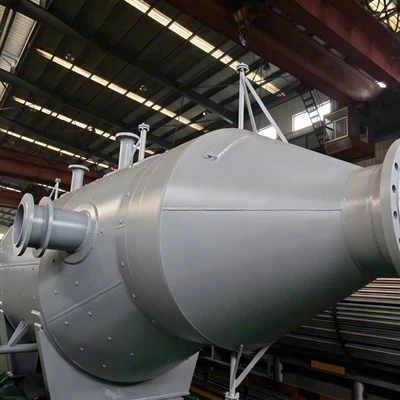
If you’re working in oil and gas and dealing with heat exchanger issues—frequent leaks, costly downtime, units that don’t fit your space, or trouble with thermal expansion—I’m here to help. We design and manufacture custom U-tube heat exchangers tailored to your specific environment, whether that’s an offshore rig in the Arctic, a midstream terminal in the Permian, or a refinery on the Gulf Coast. We use only high-quality alloys, build to industry standards, and work with your maintenance teams to make sure your units are easy to service and reliable for years to come. Let’s connect to discuss your needs, walk through your operation’s heat transfer challenges, and find a U-tube exchanger that works for you.
Heat Exchanger References
- Kern, D. Q. (1950). Process Heat Transfer. McGraw-Hill Education.
- American Petroleum Institute (API). (2020). Standard 660: Shell-and-Tube Heat Exchangers for Refinery Services.
- Sinnott, R. K., & Towler, G. (2019). Chemical Engineering Design: Principles, Practice and Economics of Plant and Process Design. Elsevier.
- North Sea Offshore Operators Association. (2021). Reliability Standards for Process Equipment in Extreme Marine Environments.
- Permian Basin Petroleum Association. (2022). Midstream Infrastructure Best Practices for Crude Oil and Natural Gas Processing.
Shandong Meiling International Trading Co., Ltd.
We are one of the most professional u-tube heat exchangers manufacturers and suppliers in China, featured by quality products and good service. Please feel free to wholesale advanced u-tube heat exchangers made in China here from our factory. Customized orders are welcome.
Address: No. 998 Niushan Road, Linzi District, Zibo City, Shandong Province
E-mail: dingxiaoli@sdmeiling.com.cn
WebSite: https://www.ml-heatexchanger.com/
