Hey everyone, and welcome back to the PV tech corner—today we’re diving into a question I get at least twice a week from solar installers, project managers, and even regular homeowners looking to level up their solar setups: Can photovoltaic accessories actually be recycled? For those who don’t know, I’m [Your Name], and I’ve run a small, trusted photovoltaic accessories supplier for the last 12 years. I’ve seen every part of the solar ecosystem, from the tiny junction boxes that hold panel connections to the big mounting racks that hold everything up on a roof. When people ask me about recycling, it’s never a yes/no answer, honestly—but let me break this down like I would to a new installer sitting across my desk, no jargon, no corporate fluff. Photovoltaic Accessories

First, let’s get one thing straight: Most people only think about recycling solar panels themselves, right? The big silicon wafers with the glass and aluminum frame. But the accessories that tie those panels together—cables, junction boxes, mounting hardware, inverters (wait, yeah, inverters are technically accessories if they’re part of the system’s supporting gear), racking clamps, even those tiny surge protectors—they’re a whole separate category that doesn’t get nearly enough attention. And here’s the thing: A lot of these parts aren’t just “plastic and metal” like some people think. They’re made of mixed materials, some with tricky coatings, so recycling them isn’t as straightforward as tossing an aluminum can in your blue bin.
Let’s start with the most common photovoltaic accessories I sell every single week, and their recyclability, because that’s what my customers actually care about. First up: solar cables. You know the ones—they’re those thick, UV-resistant black cables that run from the panels to the inverter. Most of these are copper core with a cross-linked polyethylene (XLPE) outer jacket, plus some have a PVC inner layer for extra protection. For decades, people have been stripping the copper out of old cables to sell as scrap metal, but the jackets? Most of that was just going to landfills… until a few years back. Now, there are specialized recycling facilities that can process XLPE and other solar cable jackets into things like plastic lumber for fence posts or even new cable insulation—though it’s not super common yet, because the cost of shipping small batches of jackets to these facilities eats into the profit for recyclers. That said, I’ve started seeing more of the big national solar installers I work with set up take-back programs for old cables, and they’ve partnered with local recyclers to handle this specifically, so it’s getting better.
Next, junction boxes. These are the little plastic boxes (usually made of engineering-grade polycarbonate) that sit on the back of each solar panel, holding the diodes and connecting the panel’s internal wires to the external cables. Inside, there’s a tiny bit of metal—copper, maybe some tin for soldering—and sometimes a sealant or adhesive that’s hard to separate. For a long time, junction boxes were basically unrecyclable, because separating the polycarbonate, metal, and diodes was too labor-intensive to be worth it. But in the last five years, with the solar industry blowing up, new recycling tech has come out: some facilities use mechanical shredding that separates the plastics from the metals using air classification, and they can even recover the diodes’ small amounts of rare metals now, too. The only catch? Most of this is for bulk, industrial-scale recycling, not curbside—so if you’re a homeowner replacing a panel, don’t toss that old junction box in your regular recycling bin; hold onto it and bring it to a local solar waste drop-off or give it back to the installer who’s doing your job.
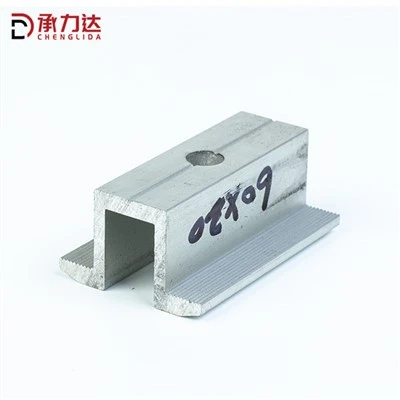
Then there’s mounting hardware—this is stuff I sell so much of it’s like my top SKU: racking clamps, roof hooks, railings, brackets, all that. Most of it is aluminum or stainless steel, which are super easy to recycle, right? Wait, but hold on—some of the cheaper clamps you can buy online have a thin coating of zinc or even plastic to resist corrosion, and that coating can mess with the recycling process if you just toss the whole thing in a metal bin. The good news is, reputable suppliers (like mine, obviously) use aluminum and stainless steel that’s already compatible with standard metal recycling, no extra coating that causes issues. When those old clamps or rails are taken to a metal recycler, they just melt them down and make new parts—no problem at all. In fact, I’ve heard that aluminum from old solar racking is one of the purest recycled aluminum you can get, because it doesn’t have a lot of contaminants compared to, say, old car parts. That’s a win-win.
Now, the parts that are trickier—let’s talk about small electronic accessories: microinverters, power optimizers, surge protectors. These have circuit boards, capacitors, tiny amounts of lithium, sometimes even small batteries for backup. For these, standard e-waste recycling works, but not all e-waste facilities can handle solar-specific electronics, because they have different components than, say, a laptop. The key here is to make sure you’re working with a recycler that has experience with PV gear. I always tell my customers: if you have an old microinverter, don’t take it to a generic e-waste bin—find a facility that can pull out the copper, aluminum, and even the small amounts of precious metals like gold from the circuit boards, and dispose of any hazardous materials (like old capacitors with PCBs) properly. The alternative is those parts going to a landfill, where the chemicals can leach into the ground, which is why it’s worth the extra 10 minutes of research to find the right place.
Wait, but here’s the big question I get: Is it worth recycling PV accessories, or is it just a marketing gimmick? Let’s be real—for a long time, recycling these parts was more expensive than just sending them to the landfill, especially for small jobs. But lately, two things have changed. First, the scale of solar is huge now—we’re installing more solar every year than we did in the entire 2000s combined, so there’s way more old accessories coming off systems that have reached the end of their life (most PV systems last 25-30 years, so we’re starting to hit that first big wave of old gear). Second, the tech has gotten better, and governments in a lot of countries (including the US, EU, and parts of Asia) have started implementing extended producer responsibility (EPR) laws for solar. What that means is that suppliers like me have to pay into a fund that covers the cost of recycling old PV parts, so we’re not just passing that cost onto installers or homeowners. That’s been a game-changer—now, recycling isn’t just “good for the planet,” it’s actually affordable for everyone involved.
But let’s be honest, there are still gaps. For example, if you’re a small homeowner who replaces one cable because it got damaged, you’re not going to call a recycler for a 6-foot piece of cable—you might toss it in the trash, and that’s totally understandable, because the logistics don’t make sense for that tiny amount. The same goes for a single junction box. The problem is when everyone does that—all those small parts add up to a lot of waste. That’s why I always encourage installers to set up a “PV waste bin” on every job site, where they collect all the old accessories, even the small ones, and then drop them off at a local recycler that handles bulk solar gear. It’s not hard, it just takes a little planning.
And for what it’s worth, as a supplier, I’ve started doing my part too. Last year, I launched a free take-back program for any of my customers—installers, homeowners, whoever—who want to send back old accessories that they’re replacing, even if they’re not from my products. I figured that if we want the entire industry to move toward more sustainable practices, we can’t turn our backs on old gear just because someone else made it. We invested in a partnership with a regional recycling facility that specializes in solar, so we don’t have to worry about sending it to a generic place that can’t process it. In the last year, we’ve taken back over 12,000 pounds of old cables, clamps, junction boxes, and microinverters—stuff that would’ve gone to landfills otherwise. It’s not a huge number, but it’s a start, and every little bit counts.
Wait, let’s address the elephant in the room: what about the parts that can’t be recycled right now? Are they just a lost cause? Let’s be clear—there are still some PV accessories that end up in landfills, mostly the ones with mixed materials that can’t be separated cheaply, or small parts that aren’t worth the effort. But that’s changing fast. Just last month, I saw a new tech that can recycle polycarbonate from junction boxes by using a chemical process that breaks down the plastic into its raw materials, so it can be made into new plastic for anything from water bottles to new junction boxes. It’s still pricey, but as more companies adopt it, the cost will come down. And for parts that are truly unrecyclable, we’re starting to look at circular design—making accessories that are easier to take apart, with fewer mixed materials, so that when their life is over, every single part can be reused or recycled. That’s the future, and it’s not that far off.
Another thing people don’t talk about enough: the value of recycling PV accessories. Like, it’s not just about saving the planet—you can actually make money from it. The copper in old cables, the aluminum in racking, the gold and silver in microinverters—those are all scrap materials that have value. When you send old accessories to a recycler that pays for scrap metal, you can get a little cash back, which helps offset the cost of recycling. I know installers who use that cash to cover the cost of their next job, or donate it to local solar education programs. It’s a win-win: you reduce waste, you get some money back, and you’re supporting the industry’s sustainability goals.
But let’s not act like everything is perfect. There’s still a big lack of awareness out there. A lot of people don’t even know that you can recycle PV accessories, or they think it’s too hard. That’s why I make it a point to talk about this with every customer who walks through my door or emails me a question. I send out monthly newsletters with a list of local recyclers that handle solar gear, and I’ve put up resources on my website (shameless plug, but it’s true) that tell you exactly how to recycle each type of accessory. For example, if you need to recycle old microinverters, here’s the link to the program that works with my area; if you have old cables, here’s how to find a scrap yard that can process the plastic jacket. Small stuff, but it makes a difference.
Wait, let’s wrap this up, because I know I’ve rambled a bit, but that’s how I talk when I’m passionate about this. To answer the original question: Yes, photovoltaic accessories can be recycled, but it’s not a one-size-fits-all answer. Some parts (aluminum racking, steel clamps) are super easy to recycle with standard metal facilities, others (cable jackets, junction boxes) are getting easier to recycle as tech improves, and small electronic accessories (microinverters, power optimizers) work best with specialized e-waste recyclers. It’s not perfect, there are still gaps, and it’s not as simple as tossing everything in your blue bin, but it’s way more possible now than it was even 5 years ago.
If you’re an installer, a homeowner, or someone in the solar industry looking to upgrade your system, or you have old PV accessories that you need to dispose of, feel free to reach out to us. We can help you figure out the best way to recycle whatever you have, or even take back parts through our free take-back program. We’re here to make this easier for everyone, not just the big companies.
Other Photovoltaic Accessories At the end of the day, the solar industry is all about renewable energy, but we can’t forget about what happens when that gear reaches the end of its life. Recycling PV accessories isn’t just a nice gesture—it’s a necessary part of making solar truly sustainable. And as a supplier, I’m proud to be part of that movement, even if it’s just a small part.
References
- International Energy Agency (IEA) Photovoltaic Power Systems Programme. (2022). End-of-Life Management for Photovoltaic Systems. IEA.
- Solar Energy Industries Association (SEIA). (2023). Extended Producer Responsibility for Solar: State of the Industry. SEIA.
- European Commission. (2021). PV Recycling Technology Update. European Commission Directorate-General for Energy.
- PV Cycle. (2022). Annual Report on PV Accessory Recycling. PV Cycle Association.
- U.S. Environmental Protection Agency (EPA). (2023). E-Waste Best Practices for Solar Components. EPA Office of Resource Conservation and Recovery.
Wuxi Chenglida Machinery Co., Ltd.
We are one of the most professional photovoltaic accessories manufacturers and suppliers in China, also support customized service. Please feel free to buy durable photovoltaic accessories made in China here from our factory. Quality products and reasonable price are available.
Address: No.4 Ruifeng Road, Huishan District, Wuxi City
E-mail: postmaster@wxcldjx.com
WebSite: https://www.wuxi-chenglida.com/
