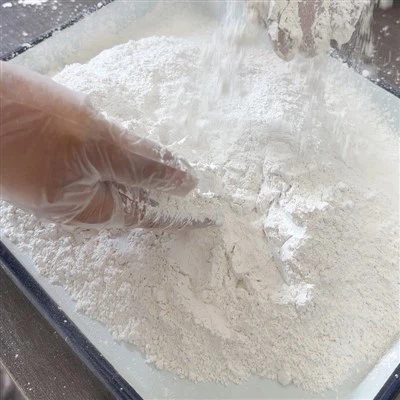
Calcite powder, a widely used industrial material, has drawn significant attention due to its diverse applications across various sectors. As a supplier of calcite powder, I’ve had the privilege of exploring its unique rheological properties and understanding how they impact different industries. In this blog, I’ll delve into the key aspects of the rheological properties of calcite powder, shedding light on its behavior under different conditions and its implications for various applications. Calcite Powder
Understanding Rheology
Rheology is the study of the flow and deformation of materials, and it plays a crucial role in determining how a substance behaves under stress or strain. When it comes to calcite powder, its rheological properties are influenced by several factors, including particle size, shape, surface area, and the presence of additives or dispersants. These properties can have a profound impact on the processing, performance, and end – use of calcite powder in different products.
Particle Size and Shape
One of the most significant factors affecting the rheological properties of calcite powder is particle size. Generally, smaller particle sizes result in higher viscosity and better dispersion in a liquid medium. This is because smaller particles have a larger surface area per unit volume, which leads to increased interactions between the particles and the surrounding fluid. For example, in a paint formulation, fine – grained calcite powder can improve the viscosity and stability of the paint, preventing settling and sagging.
The shape of calcite particles also matters. Irregularly shaped particles tend to interlock more easily, increasing the resistance to flow and resulting in higher viscosity. In contrast, spherical – shaped particles can roll over each other more smoothly, leading to lower viscosity and better flow properties. As a supplier, we carefully control the particle size and shape of our calcite powder to meet the specific requirements of different industries.
Surface Area and Surface Chemistry
The surface area of calcite powder is another critical factor influencing its rheology. A higher surface area provides more sites for interaction with the surrounding medium, which can increase the viscosity and thixotropy of the material. Surface chemistry also plays a role; for instance, if the surface of the calcite particles is modified with certain chemicals, it can change the hydrophilic or hydrophobic nature of the particles, affecting their dispersion in different solvents or polymers.
In some applications, such as in resin – based composites, the surface treatment of calcite powder can improve its compatibility with the resin matrix, leading to better dispersion and enhanced mechanical properties. We offer calcite powder with different surface treatments to cater to the specific surface chemistry requirements of our customers.
Concentration and Solvent Effects
The concentration of calcite powder in a solution or a mixture significantly affects its rheological properties. At lower concentrations, the particles are more dispersed, and the viscosity is relatively low. As the concentration increases, the particles start to interact more frequently, leading to an increase in viscosity. In extreme cases, at very high concentrations, the system may exhibit non – Newtonian behavior, such as shear – thinning or shear – thickening.
The type of solvent or carrier medium also has an impact. Polar solvents can interact more strongly with the calcite particles compared to non – polar solvents, leading to different rheological behaviors. For example, in a water – based system, the hydration of calcite particles can influence their dispersion and flow properties. We have extensive experience in understanding how different solvents and concentrations affect the rheology of our calcite powder, and we can provide technical support to our customers in formulating the right mixtures.
Rheological Behavior in Different Industries
Paint and Coating Industry
In the paint and coating industry, the rheological properties of calcite powder are of utmost importance. Calcite powder is used as a filler to improve the mechanical properties, opacity, and flow characteristics of paints. The thixotropic nature of calcite – filled paints allows for easy application under shear stress (such as during brushing or spraying) and high viscosity at rest, which prevents dripping and sagging. Our calcite powder products are carefully selected and processed to ensure optimal rheological behavior in paint formulations, providing better hiding power, gloss, and durability.
Plastics Industry
In the plastics industry, calcite powder is often added to modify the mechanical and rheological properties of polymers. It can act as a reinforcing agent, increasing the stiffness and strength of the plastic product. The rheological behavior of the polymer – calcite composite is affected by the dispersion of the calcite particles in the polymer matrix. Good dispersion is essential to achieve uniform mechanical properties and proper flow during processing. Our high – quality calcite powder has excellent dispersibility, which helps in producing plastic products with consistent quality and improved performance.
Adhesive and Sealant Industry
Adhesives and sealants require specific rheological properties to ensure proper application and bonding. Calcite powder can be used as a filler to adjust the viscosity and thixotropy of these products. It provides better sag resistance, improved adhesion, and enhanced mechanical properties. Our calcite powder can be customized to meet the specific rheological requirements of different adhesive and sealant formulations, helping our customers to develop high – performance products.
Quality Control and Testing
As a reliable supplier of calcite powder, we place great emphasis on quality control and testing. We use advanced rheological testing equipment, such as rheometers, to measure the viscosity, shear stress, and flow behavior of our calcite powder under different conditions. These tests allow us to ensure that our products meet the exacting standards of our customers.
We also conduct particle size analysis, surface area measurement, and chemical analysis to verify the quality and consistency of our calcite powder. By maintaining strict quality control measures, we can provide our customers with calcite powder that has predictable and reproducible rheological properties.
Meeting Customer Needs
Understanding the rheological properties of calcite powder is essential for us to meet the diverse needs of our customers. We work closely with our clients to understand their specific applications and requirements. Whether they need calcite powder with high thixotropy for a paint application or low – viscosity powder for a plastic composite, we have the expertise and resources to provide the right solution.
We offer a wide range of calcite powder grades, each with tailored rheological properties. Our technical team is always available to provide support and advice on product selection, formulation, and processing. We believe that by collaborating with our customers, we can develop innovative solutions that leverage the unique rheological properties of calcite powder.
Conclusion
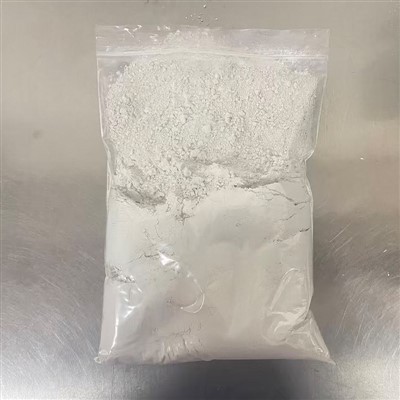
The rheological properties of calcite powder are complex and influenced by multiple factors, including particle size, shape, surface area, concentration, and solvent effects. These properties have a significant impact on the performance and processing of calcite powder in various industries, such as paints, plastics, adhesives, and sealants. As a calcite powder supplier, we are committed to providing high – quality products with well – controlled rheological properties. Our in – depth knowledge of calcite powder rheology allows us to offer customized solutions to our customers, helping them to achieve their desired product performance.
Calcium Hydroxide Powder If you are interested in learning more about our calcite powder products and how their rheological properties can benefit your specific application, or if you want to discuss a potential purchase, please feel free to get in touch with us. We are looking forward to engaging in productive discussions with you and building a long – term partnership.
References
- Barnes, H. A., Hutton, J. F., & Walters, K. (1989). An Introduction to Rheology. Elsevier.
- Steffe, J. F. (1996). Rheological Methods in Food Process Engineering. Freeman Press.
- Batchelor, G. K. (2000). An Introduction to Fluid Dynamics. Cambridge University Press.
Chaohu Jirun Energy Conservation and Environmental Protection Technology Co., Ltd.
We’re well-known as one of the leading calcite powder manufacturers and suppliers in China, also support customized service. Welcome to wholesale high quality calcite powder in stock here from our factory. If you have any enquiry about pricelist, please feel free to email us.
Address: No. 9, north of the intersection of Weihai Road and Weili Avenue, within the industrial park of Yinping Town, Chaohu City, Hefei City, Anhui Province.
E-mail: 13305654485@163.com
WebSite: https://www.chaohujirun.com/
