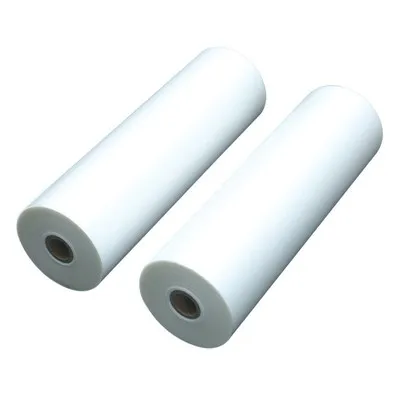
Hey there! As a supplier of Digital Thermal Laminaton Film, I often get asked about how well our film plays with different printing inks. It’s a crucial question, especially for those who’re in the printing and packaging business. So, let’s dive right into it and explore the compatibility of digital thermal laminaton film with various printing inks. Digital Thermal Laminaton Film
Understanding Digital Thermal Laminaton Film
First off, let’s quickly go over what digital thermal laminaton film is. It’s a type of film that we use to protect and enhance printed materials. When heat is applied, the film adheres to the printed surface, giving it a smooth, shiny finish. This not only makes the print look better but also adds durability, protecting it from scratches, moisture, and fading.
Types of Printing Inks
There are several types of printing inks out there, each with its own unique properties. The most common ones include:
1. Solvent – Based Inks
Solvent – based inks have been around for a long time. They contain solvents that evaporate during the drying process, leaving behind the pigment on the printing surface. These inks are known for their excellent adhesion and fast – drying properties. They’re often used in applications where high – quality, long – lasting prints are required, like outdoor billboards and labels.
The compatibility of our digital thermal laminaton film with solvent – based inks is generally quite good. The solvents in the ink don’t usually react negatively with the film during the lamination process. However, we’ve to be careful about the temperature and pressure settings. If the temperature is too high, it could cause the solvents in the ink to evaporate too quickly, which might lead to blistering or uneven lamination.
2. Water – Based Inks
Water – based inks are more environmentally friendly compared to solvent – based inks. They use water as the main carrier for the pigment, and they emit fewer volatile organic compounds (VOCs). These inks are commonly used in packaging, book printing, and promotional materials.
When it comes to our digital thermal laminaton film, water – based inks usually work well. The film can bond effectively with the printed surface, as long as the ink has dried completely. One thing to note is that water – based inks can take longer to dry compared to solvent – based inks. So, we need to make sure there’s no residual moisture during the lamination process, or it could result in bubbles or poor adhesion.
3. UV – Curable Inks
UV – curable inks are cured using ultraviolet light. They dry almost instantly when exposed to UV rays, which makes them ideal for high – speed printing processes. These inks are often used in industries such as graphic arts, electronics, and offset printing.
Our digital thermal laminaton film is highly compatible with UV – curable inks. The instant curing of the ink means there’s no risk of ink transfer during lamination. Plus, the smooth and hard surface of UV – cured prints provides an excellent base for the film to adhere to. However, we still need to ensure that the UV – curing process is complete and that there are no unreacted monomers on the surface, as these could affect the lamination quality.
4. Oil – Based Inks
Oil – based inks are commonly used in traditional printing methods like letterpress and lithography. They dry through oxidation, which can take a relatively long time. These inks are known for their rich colors and high opacity.
The compatibility of our digital thermal laminaton film with oil – based inks can be a bit tricky. Since oil – based inks take time to dry completely, there’s a risk of ink transfer during lamination if the ink isn’t fully cured. We might need to wait longer before laminating or use a pre – treatment to ensure better adhesion.
Factors Affecting Compatibility
Apart from the type of ink, there are other factors that can affect the compatibility of digital thermal laminaton film with printing inks:
1. Printing Substrate
The type of substrate on which the ink is printed matters a lot. Different substrates, such as paper, cardboard, or plastic, have different surface properties. For example, porous paper might absorb the ink differently compared to a non – porous plastic sheet. This can impact how well the film adheres to the printed surface.
2. Lamination Temperature and Pressure
As I mentioned earlier, the temperature and pressure during the lamination process are crucial. If the temperature is too low, the film might not bond properly with the ink and substrate. On the other hand, if it’s too high, it can cause problems like ink bleeding or film shrinkage. The right pressure is also important to ensure even lamination across the entire surface.
3. Ink Thickness
The thickness of the printed ink layer can affect compatibility. A thick layer of ink might take longer to dry and could potentially cause problems during lamination, such as uneven bonding or trapped air bubbles.
How We Test Compatibility
At our company, we take compatibility testing very seriously. We conduct a series of tests before we recommend our digital thermal laminaton film for use with specific printing inks.
First, we print test samples using different inks on various substrates. Then, we laminate these samples using our film under different temperature and pressure conditions. We observe the results for any signs of poor adhesion, blistering, ink transfer, or other defects.
We also test the long – term performance of the laminated samples. We expose them to different environmental conditions, such as humidity, heat, and light, to see how well the lamination holds up over time. Based on these tests, we can provide our customers with accurate information about the compatibility of our film with different inks.
Importance of Compatibility
Why is compatibility so important? Well, if the digital thermal laminaton film isn’t compatible with the printing ink, it can lead to a whole bunch of problems. For example, poor adhesion can cause the film to peel off, making the printed material look unprofessional and reducing its durability. Ink transfer can result in a messy appearance and might even damage the film.
On the other hand, when the film and ink are compatible, we get high – quality, long – lasting prints. The printed materials look great, feel better, and are more resistant to wear and tear. This is especially important for applications where the printed materials are going to be handled a lot or exposed to harsh environments.
Conclusion
In conclusion, the compatibility of digital thermal laminaton film with different printing inks depends on several factors, including the type of ink, the printing substrate, the lamination temperature and pressure, and the ink thickness. As a supplier, we’ve done our best to ensure that our film is compatible with a wide range of inks, but it’s always a good idea to do some small – scale testing before starting a large – scale project.
Thermal Laminating Film If you’re in the market for digital thermal laminaton film and want to know more about how it will work with your specific printing inks, don’t hesitate to reach out. We’re always here to help you make the right choice and ensure that your printing projects turn out perfectly. Let’s start a conversation and see how we can work together to achieve the best results.
References
- "Printing Ink Technology" by Andrew J. Patton
- "Lamination Processes and Materials" by Thomas E. Fouquet
Yantai Hongqing Packing Material Co., Ltd.
Yantai Hongqing Packing Material Co., Ltd. is one of the most professional digital thermal laminaton film manufacturers and suppliers in China, also supports customized service. Welcome to wholesale advanced digital thermal laminaton film made in China here and get quotation from our factory. Quality products and reasonable price are available.
Address: Eastern Industrial Park, Taocun, Yantai, Shandong Province, China
E-mail: cindy@ythongguang.cn
WebSite: https://www.hqingnewmat.com/
